Buying and relocating a removal home is a cost-effective pathway to home ownership in New Zealand, and the process follows a set of manageable stages. From choosing a house and preparing the site through to moving night and final connections, each step has a defined purpose and a set place in the sequence. With Fenton House Removals working alongside you throughout, the process, from first enquiry to moving night, is one you can approach with confidence.
What This Guide Covers
- How Long Does House Relocation Take in NZ?
- Choosing Your House and Your Site
- Draftsman, Plans and Consents
- Preparing the Site and Setting the Foundations
- Moving Night: Moving a House in NZ
- Reinstatement and Connections
- How the Stages Fit Together
- What Shapes Your Timeline
- How Fenton House Removals Can Help
- Frequently Asked Questions
How Long Does House Relocation Take in NZ?
Every house relocation in NZ is different, although Fenton’s own figures give a reliable picture of what to expect. Fenton recommends allowing approximately three months’ lead time from booking to moving night, as moves are scheduled well in advance. Once consents and site works are approved, most relocations are completed within a few weeks, and an average three-bedroom house takes approximately one week to move to its new site and place on new foundations.
Consent is managed by your local council, and your draftsman will confirm the requirements and expected timing for your site early in the process. Reinstatement and service connections follow the move, with timing set by the scope of work and the availability of your tradespeople.
Choosing Your House and Your Site
The process begins with choosing a house and confirming it suits your land. The relocation homes for sale on the properties page are a practical starting point. A visit to the yard at 2 Garfield Road, Helensville shows the full range in person, including houses not yet listed online. Browsing houses for removal in NZ this way makes it easier to settle on a size and layout that suits your plans and budget. A second-hand building report on your chosen relocatable house may be required for building consent, so arranging one early keeps the process moving. Covenant checks and a geotechnical report on soil stability should also be completed at this point to understand where the house could be safely placed.
Alongside choosing your house, the next step is to book a site assessment with the Fenton team. The assessment covers access for the house and truck, the best position on the section and anything that needs clearing before delivery. Fenton recommends securing a suitable section early, and in practice the land and house decisions often progress side by side.
Draftsman, Plans and Consents
If you have a specific house in mind for your section it is now time to engage a draftsman to ensure the house will be suitable and a building consent can be achieved. Fenton works alongside your draftsman throughout, who advises on the best position for the house on the section, including distances to boundaries, orientation, driveways and other site features. The house relocation guide outlines the other professionals involved, such as surveyors and geotechnical engineers, and the role each one plays.
Requirements for relocating a house in NZ differ by council, by zone and by site, so no single national rule applies. Some councils treat a relocation as a permitted activity where certain standards are met, while others require resource consent, as well as a building consent. Your local council and draftsman can confirm the requirements for your site. The MBIE building consent process page explains how building consent works in New Zealand.
Preparing the Site and Setting the Foundations
Site preparation takes place ahead of moving night and is organised by the property owner. It can include clearing the area, confirming access is wide enough for the house and truck, and planning drainage, and the site preparation guide sets out what is involved. The new site is classed as a work site, so the same health and safety requirements apply as on any construction site.
Your geotechnical engineer assesses the soil on your site and designs the foundations to suit it, which may call for timber piles, a concrete slab or another approach. Where timber piles are specified, Fenton House Removals can install timber pile foundations to the engineer’s plans. In general, standard NZ3604 timber pile foundations are included in the purchasing price when buying a house from Fenton House Removals. Buyers are also welcome to engage their own foundation contractor.
Moving Night: Moving a House in NZ
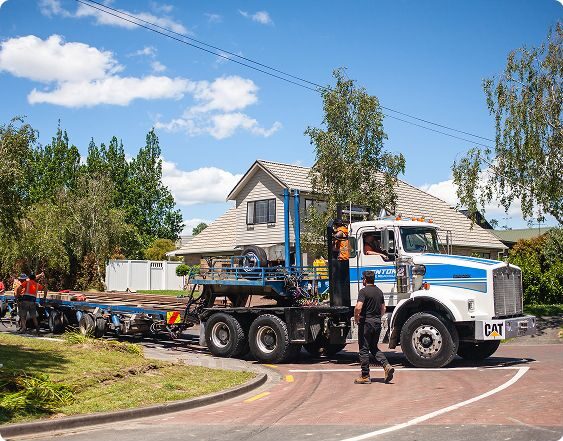
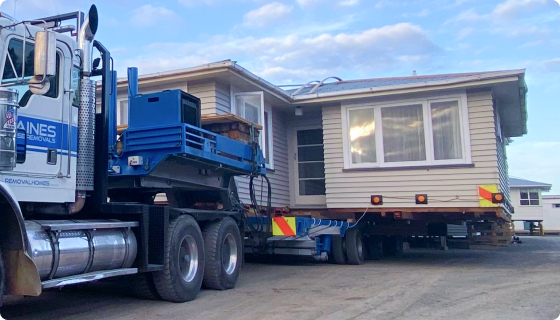
Moving night is where the planning comes together. House moving in NZ is generally carried out as an over–dimensional load, requiring various permits. Each permit sets specific routes and travel times for the load. House moves take place at night, and larger houses travel in sections, with some journeys taking more than one night depending on the distance and complexity of the route.
On arrival, Fenton rejoins the sections, then places the house on its new foundations. For an average single-piece, three-bedroom house, the move and placement take approximately one week. The We Move Homes page covers this part of the process in more detail.
Reinstatement and Connections
With the house in position, the next step is to engage a builder, roofer, electrician, plumber and other tradespeople to complete reinstatement and connect services. Typical work includes finishing along the lines where sections were rejoined, reinstating any roof sections lowered for travel, adding steps and decks, and connecting power, water and wastewater. Lining up your tradespeople before moving night allows this work to begin as soon as the house is placed.
How the Stages Fit Together
The table below sets out who leads each stage of a house relocation in NZ and what to expect for timing. Fenton recommends allowing approximately three months between booking and moving night, which gives every stage room to fall into place.
| Stage | Who Leads | Timing to Expect |
| Choosing your house and site | You, supported by a site assessment with the Fenton team and preliminary check by a draftsman if house can go onto chosen site and obtain building consent | Set by you, allowing time for reports |
| Plans and consents | Your draftsman and council | Varies by council, on average a three month turnaround |
| Site preparation | To be organised by owner | Completed ahead of moving night |
| Foundations | Fenton or your own contractor | Completed ahead of moving nightas soon as the house arrives on site |
| Moving night and placement | Fenton, under various permits | Approximately one week for an average single-piece three-bedroom house |
| Reinstatement and connections | Your own tradespeople | Depends on the scope of work and the availability of your tradespeople |
What Shapes Your Timeline
Several planning factors influence how the stages line up for each project. Site access and the contour of the section determine how much preparation is needed before delivery, and the distance from the yard affects how many nights the journey takes. Council processes vary between regions (averaging around three months), and the season can affect ground conditions for site work.
Keeping each task moving is the most effective way to manage the overall timeline. Engaging your draftsman early, arranging your geotechnical and second-hand building reports promptly, and booking your tradespeople ahead of moving night all help one stage lead straight into the next. A site assessment with the Fenton team is the right time to talk these through.
How Fenton House Removals Can Help
Relocating a house brings together several professionals and decisions, and an experienced partner makes each of them easier to manage. Fenton House Removals provides practical advice on the site and foundations and works alongside your draftsman. House removals in NZ offer an affordable and practical route into home ownership. With approximately three months’ lead time recommended, an early conversation with the team is the best way to build a realistic timeline and budget for your project.
The clearest next step is to book a site assessment with the Fenton team. The experienced Fenton team is always happy to answer any questions along the way on 027 382 4628 or at sales@removalhomes.co.nz.
Frequently Asked Questions
How Long Does It Take to Relocate a House in New Zealand?
Every project is different, although most relocations are completed within a few weeks once consents and site works are approved. Fenton recommends allowing approximately three months’ lead time from booking to moving night, and an average three-bedroom house takes approximately one week to move and place on new foundations. Fenton House Removals offers its customers three months storage of their house for free in their yard.
How Far in Advance Does a House Move Need to Be Booked?
Fenton recommends booking approximately three months in advance, as house removals in NZ are scheduled well ahead. Booking early also allows more time to arrange plans, consents and site preparation.
Do I Need Consent to Relocate a House?
A building consent is generally required, and a resource consent may also apply depending on your site. Requirements vary by council, so engage a draftsman early to guide the specifics for your property and to ensure that your chosen house will fit on the section and receive building consent approval.
Why Do Houses Get Moved at Night?
House moves take place at night. Each house travels as an over–dimensional load under a permit that sets the approved route and travel times, and Auckland Transport notes that these permits are usually restricted to specific routes and times. Larger houses may travel over more than one night, depending on the distance to the new site and complexity of the route.
How Long Does It Take to Place the House Once It Arrives?
For an average single-piece three-bedroom house, the move and placement on new foundations take approximately one week. Larger houses that travel in more sections can take longer to rejoin, place and level.
Who Connects the Power, Water and Wastewater?
Once the house is placed, the next step is to engage your tradespeople, such as your roofer, electrician and plumber, to connect services.