Relocating a house to your own site can be a smart, affordable and practical way into a quality home with genuine character and craftsmanship. The site you choose and the guidance you have along the way both play a significant part in how well a relocated house settles into its new home. This guide walks through what to consider, from site access and shift complexity to consents and the trades involved, so you can see how relocation might work for your own site, starting with the homes currently available for relocation.
What This Guide Covers
- Key Factors in a House Relocation
- Single-Piece, Two-Piece and Multi-Section Shifts: What the Difference Means for You
- Site Assessment: A Strong Start to Your Project
- Consents and Compliance: Straightforward When You Know What Is Involved
- What Happens After the House Arrives: Foundations, Trades and Reinstatement
- Relocating vs Building New: Which Suits Your Site
- How Fenton House Removals Can Help
- Frequently Asked Questions
Key Factors in a House Relocation
Every relocatable home and every site is different, though the same handful of factors shape how a house removal comes together. Understanding them from the outset gives a clearer picture of what a specific project involves.
- House size and shift type, whether the home travels in one piece or needs to be split into sections
- Distance travelled from the current site to the new one
- Site access and road conditions along the route and at the destination
- Roofline, chimney or deck features that may need to come off for transport
- Building and resource consent requirements for the new site
Fenton House Removals assesses each of these factors as part of an initial site visit, giving a clear picture of what a specific project involves before any work begins.
Single-Piece, Two-Piece and Multi-Section Shifts: What the Difference Means for You
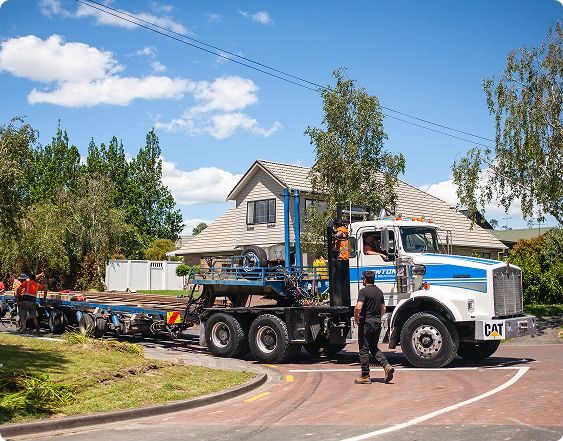
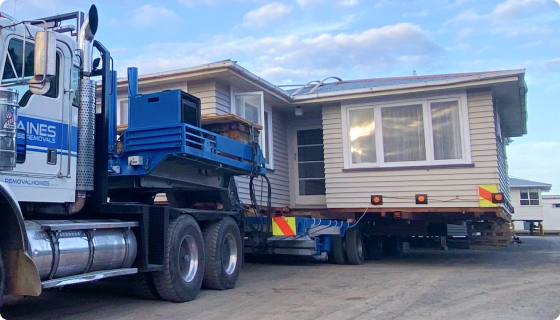
Not every house moves in one piece, and whether it does come down to its size and layout rather than a price bracket. A smaller home can often travel intact, lifted whole onto a truck and transported as a single unit. A larger home is more commonly separated into two or more sections along its natural structural lines, such as where a roofline or floor changes, so each section can travel safely on its own before being carefully rejoined and finished on site. This kind of sectional move is a well established part of Fenton’s house moving service, and an experienced team handles the separation and the rejoin as a matter of routine. Once a sectioned home reaches its new site, the pieces are carefully reassembled and placed on new foundations, ready for the next stage of the build.
| Shift Type | What It Involves | Best Suited To |
| Single-piece | The whole house travels as one unit | Standard 3 bdr, smaller homes and cottages |
| Two-piece | The house is separated into two sections and rejoined on site | Mid-sized villas and bungalows |
| Multi-section | Several sections travel separately and are reassembled | Larger homes and more complex layouts |
Housemovers have to comply with the New Zealand Transport Authority’s (NZTA) guidelines which stipulates for over-dimensional loads to only be moved at night between 10.30pm and 6am when the roads are at their quietest and the journey can be made with the least disruption to other road users. Fenton House Removals also has to do a route survey to establish where we can and can’t drive. They must obtain various permits from different authorities, such as Chorus, Vector, Kiwirail, etc.
Site Assessment: A Strong Start to Your Project
A relocation project has the best chance of running smoothly when the site has been properly assessed before anything is committed. This is worth doing early, even before a section is purchased, since land with limited access, poor ground conditions or restrictive covenants can significantly change what is realistically possible for the site.
A thorough site assessment looks at access width and road conditions for the delivery, ground conditions and the foundation type the site will need, proximity to power lines or other overhead obstructions, and how far the house needs to travel. Two further checks are worth arranging at the same time. The first is a geotechnical report confirming soil and ground stability, which determines the foundation design the site can support. The second is a check of any covenants registered on the section, as covenants can affect what may be placed there. Fenton’s site preparation guide covers this in more depth, and getting guidance on all of this before committing to a piece of land gives the whole project a much stronger footing.
Consents and Compliance: Straightforward When You Know What Is Involved
Consents are a well defined part of house relocation, understood clearly once you know the steps involved. Most relocated homes need a building consent, and depending on the site, a resource consent may also apply. Requirements can differ slightly from one council to the next, so it is worth checking the specifics for your district rather than assuming they will match a neighbouring one.
Part of this process involves checking in with a draftsman for the plans a consent application needs, including confirming the house’s position on the section in relation to boundaries, orientation, power poles and driveways. For official guidance on when a building consent applies, Check if you need consents is a useful starting point, and the Apply for building consent page from Building Performance sets out the application process itself.
What Happens After the House Arrives: Foundations, Trades and Reinstatement
Once the house is on site, a series of final steps completes the process in its new home. This means Fenton will place your home on its new foundations, levelling and securing it so the structure sits true and ready for the work that follows. From that point the remaining work is carried out by tradespeople you engage directly. A builder, roofer, electrician and plumber, etc will typically handle reinstatement like the roof, cut lines etc and various connections to ie your power, water and wastewater services.
.It’s important to engage trusted and reputable trade partners for these works. Having the right people confirmed and scheduled for the right point in the process keeps this stage moving efficiently.
Relocating vs Building New: Which Suits Your Site
Both relocating an existing house and building new have their place, and the right choice comes down to what suits your budget, your timeline, your site, and what you are hoping to get out of the project. Relocation can offer a faster, more affordable and more sustainable path to a finished home once a suitable house and site are matched.
Fenton’s guide on how to choose a relocatable home is a useful next read for landowners looking for a quicker route to a quality home.
How Fenton House Removals Can Help
The team at Fenton has many years experience sourcing, assessing and relocating homes across the North Island. Fenton House Removals brings a track record that goes well beyond the physical move itself, covered in more detail on their about us page. From the early conversation about whether a house suits your site, through consent support alongside a draftsman Fenton walks alongside clients from the first enquiry through to the placement of your home.
That guidance is often what makes the biggest difference. With someone experienced pointing you in the right direction, the whole process feels simple and well supported from start to finish. If relocation feels like it could suit your site, the clearest next step is to book a site assessment with the Fenton team or run the numbers first with the house removal cost calculatortl to give you a clear picture of what relocation could look like for your own property, and the experienced Fenton team is always happy to answer any questions along the way.
Frequently Asked Questions
What does house for removal mean?
A house for removal is an existing home that has been made available to be relocated to a new site, rather than demolished. It is typically disconnected from services so it can be transported intact or in sections, depending on size, shape and height.
Do I need consent to relocate a house in New Zealand?
In most cases, yes with the exception of some minor dwellings. Relocating a house generally requires a building consent, and depending on the site, a resource consent may also be needed. Requirements can vary by council, so it is worth confirming the specifics for your district early in the process. It is best to engage a draftsman to guide and assist you with any specific requirements that may apply to your site and to liaise with the council in your area.
How much does it typically cost to move a house in New Zealand?
Costs vary widely depending on house size, shift complexity, distance and site preparation, so there is no single figure that applies to every project. Getting a site properly assessed is the most reliable way to understand what a specific project would involve. In general, choosing a relocatable home can reduce the overall house
cost by up to approximately 50% compared with a conventional new build, depending on the house, site and required works
Is relocating a house a better option than building new?
This comes down to personal preference, your budget, timeline and it also depends on the site and the project. Relocation can offer a faster, more affordable, more sustainable path to a finished home.