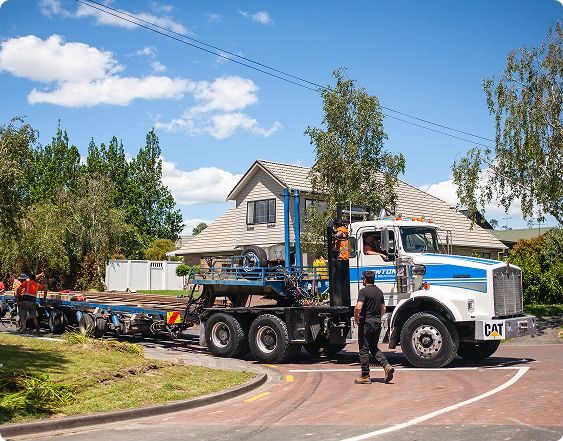
What to Expect When Viewing a Removal Home
At Fenton House Removals, we buy, sell and move all kinds of removal homes, from solid family houses, minor dwellings and sleepouts through to character villas and bungalows.
A home in the yard is a second-hand dwelling sitting on temporary piles rather than its permanent foundations, and this is a normal stage in the relocation process rather than a reflection of the home’s final condition. Once it is shifted, relevelled and finished on your site, it comes together as a properly reinstated home. Keeping that distinction in mind will help you make sense of what you’re looking at as you walk through the yard, since the home is a work in progress, not a finished product.
Here’s everything this guide covers
- Homes on Temporary Piles
- Roof, Structure and Building Materials
- Kitchens, Bathrooms and Ensuites
- The Switchboard and Wiring
- Cracks, Doors and Windows Are Cosmetic, Not Structural
- Buying a Home Still on Its Original Site
- How Much Can You Take On Yourself
- Getting Your Home Onto Its New Foundations
- The Value of a Removal Home
- Questions to Ask Our Team on the Day
- Frequently Asked Questions
Homes on Temporary Piles
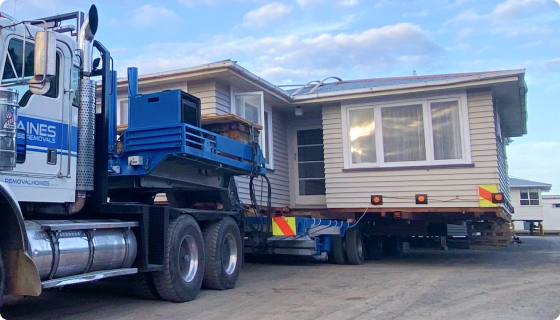
Every home in our Helensville yard has recently been lifted off its old section and driven across town or further afield before being set down carefully on temporary piles. It’s not unusual for a door that used to close nicely to stick a little, or for a fine crack to show up near a corner, and none of that means the home has been damaged. It means the home has just completed the hardest part of its journey and hasn’t yet had the chance to settle into place on its new site.
Once your home reaches its new site, our own crew, under the supervision of a Licenced Builder Practitioner (LBP), puts in new pile foundations and uses laser levels to get every pile exactly right before lowering your home into place. Any finishing touches after that, like tightening up a door or touching up a crack, which are cosmetic not structural, are simply part of settling into a new site, not a sign that anything has gone wrong along the way.
Roof, Structure and Building Materials
A good look at the roof can tell you a lot. Check the roofline for any obvious sagging or unevenness and take note of the roofing material and its general condition. Some roofing will have years of life left, and some will be due for attention sooner. Either way, it is useful information for your budget.
The structure underneath matters just as much. Ask what the home is framed with and what the exterior cladding is made from. Building materials have changed a lot over the decades, and there can be real differences in how they perform, how they age and what they cost to maintain. An older home with solid timber framing behaves differently to a more recent build with different cladding and framing systems, and neither one is automatically the better choice; it depends on what you are after and what you are comfortable maintaining.
If you want some background reading on how homes are required to perform once they are relocated, NZS 3604 is the New Zealand standard that governs timber-framed buildings, and at Fenton we are happy to explain how it applies to your chosen home and site.
Kitchens, Bathrooms and Ensuites
Kitchens, bathrooms and ensuites are usually the most expensive parts of any home to build or replace, so they deserve a proper look. Open the cupboards, check the benchtops, and get a feel for the general condition of the fittings and fixtures.
Some kitchens and bathrooms only need a few small tweaks to bring them up to scratch, while others will need a fuller replacement somewhere down the track, and either way it simply helps to know which situation you’re dealing with before you commit so you can plan and budget properly. At Fenton we can talk you through what we know about the age and condition of these spaces in each home.
The Switchboard and Wiring
Take a look at the switchboard while you are there. Modern safety standards require residual current device, or RCD, protection on power and lighting circuits, and older switchboards without it will usually need upgrading at some point. This is not unusual in an older home, and it is a straightforward job for a licensed electrician, but it is worth factoring into your costs.
Be sure to ask about the age of the wiring and whether any rewiring has already been done. For general background on electrical safety in the home, WorkSafe New Zealand’s guide to safe living with electricity is a clear, plain-language resource worth reading before your visit.
Cracks, Doors and Windows Are Cosmetic, Not Structural
Cracks in walls or ceilings, and doors or windows that aren’t sitting quite right, come up in almost every conversation, and they’re cosmetic issues rather than a sign of structural damage. When a house is uplifted, transported and then set down on temporary piles it won’t be sitting perfectly level yet, so small hairline cracks or a door that catches slightly are a completely normal part of that process, and it happens to well-built homes just as often as older ones.
At Fenton we assess the framing, the foundation connections and the overall soundness of every home closely before it goes up for sale, and that structural check is a separate matter from the cosmetic wear you’ll see in the yard or when it reaches its final destination at the new site. We’re always upfront about the difference, since it’s the distinction that actually matters when you’re deciding whether a home is right for you.
Once our crew has placed the home level on its new foundations, doors and windows generally settle back into place, and any cosmetic touch ups, like patching a crack, are simple finishing work you can arrange as part of settling into your new site.
Buying a Home Still on Its Original Site
If you are looking at a home that has not yet been uplifted, there is one extra step worth taking seriously; understanding how easy or difficult that uplift will actually be.
Site access, the distance to the road, overhead lines, retaining walls, mature trees and the layout of neighboring properties can all affect the cost and complexity of getting a house off its original section. We have seen buyers get caught out with unexpected costs simply because this part was not looked into properly before they committed. It’s a good idea to get a clear picture of what the uplift will involve for the specific home and site you have in mind. At Fenton we gladly assist you in assessing feasibility.
How Much Can You Take On Yourself
Buying a removal home usually comes with some finishing work once it is on site, and how much of that you take on yourself will shape both your budget and your timeline.
Some buyers are handy and comfortable taking on a good share of the tidy-up work themselves, from painting through to smaller repairs, while others would rather bring in trades to handle all of it, and both approaches work well depending on your own skills, time and what you’d simply rather leave to the professionals. Being honest with yourself about your DIY ability and the time you actually have available will help you plan realistically for what comes after settlement.
Getting Your Home Onto Its New Foundations
Before your home is delivered, our own crew visits your site and builds the new pile foundations it will sit on. Every pile is checked with a laser level to make sure it is completely level, and only once that is confirmed does our crew lower your home into place. Our people are very experienced and work under the supervision of a Licenced Builder Practitioner (LBP), so this whole stage is handled in-house without needing to bring in outside tradespeople.
Connecting your home to power and water, along with any finishing work such as roofing, decking or renovations, is your responsibility from there. Our team is always happy to talk you through exactly what falls within our scope and what you will need to arrange separately, so there are no surprises once your home is on site.
The Value of a Removal Home
A removal home is, at its heart, a second-hand building, and buying one means going in with realistic expectations. It will need a bit of care and attention once it lands on its new site, in the same way any pre-loved home does.
Here’s the part that matters most; even once you have factored in the finishing work, a removal home still works out considerably cheaper than building new. You get a solid, proven house, often with materials and craftsmanship that would be hard to find or afford in a new build, at a fraction of the cost. For many of our buyers, that is exactly what makes homeownership possible.
Questions to Ask Our Team on the Day
Our team is experienced, straightforward and genuinely happy to talk you through a home in detail. There is no such thing as an unhelpful question at a removal home viewing. These are a few worth asking.
- How old is the home, and what is it built from? This shapes what maintenance and materials you are working with.
- What foundations will the home need at my site? This has a real impact on your overall budget.
- What is the condition of the roof, switchboard and any kitchen or bathroom fittings? Ask us directly, and we will give you a straight answer.
- What does the sale price include? Confirm whether transport, foundation work and levelling are covered, and get clear on what you will need to arrange separately, such as connecting power and water or any finishing work.
- If the home is still on its original site, how straightforward will the uplift be? Ask about access, overhead lines and anything else that could affect cost.
Frequently Asked Questions
Q; Does Fenton House Removals only sell villas and bungalows?
A; No. We buy, sell and move all kinds of removal homes, including standard family houses, minor dwellings and sleepouts, and we are happy to talk you through whatever is currently in the yard.
Q; Why doesn’t a home in the yard look finished yet?
A; Every home in our yard is sitting on temporary piles after being lifted from its original site, and this is the stage before it’s placed and levelled on its permanent foundations. Doors that stick, fine cracks and a slightly uneven feel underfoot are all normal at this stage.
Q; Does Fenton connect the power and water, or handle finishing touches like decking?
A; No. Our crew’s job is to build your new pile foundations, laser-level them and place your home on site. Connecting power and water, and any finishing work such as decking or renovations, is something you will arrange separately once the home is in place.
Q; Can I bring a builder to a viewing?
A; Yes, and we encourage it. Bringing a registered builder or building inspector along is a great way to get an experienced second opinion, particularly if you are weighing up the finishing work involved.
Q; What does it cost to move a removal home?
A; Relocation costs depend on the size of the home, the distance to the new site, and the foundation work required once it arrives. We provide transparent, all-inclusive quotes covering transport, foundation installation and delivery within 100 km, so you are not piecing together costs from multiple suppliers. Speak to our team on the day for a general indication based on your site. Our house prices also include standard NZ3604 Timber Pile Foundations.
Q; Do removal homes come with a building consent?
A; A home may carry historical consent documentation from its previous site, but a new consent is required at the destination before it is placed and connected to services. We guide buyers through that process from start to finish. If you are in the Auckland region, Auckland Council’s guidance on relocating a building is a useful reference point.
Your Next Step at Our Helensville Yard
Three decades in the house removal industry has taught us a particular kind of knowledge that no manual can teach. It comes from moving hundreds of homes across the North Island, and from knowing what a home needs to travel well and settle properly on its new site. That experience is what our team brings to every conversation, whether you are buying your first home or adding to an existing portfolio.
We would rather give you the full picture than a polished sales pitch. We will walk any home with you, answer every question honestly, and make sure you leave with enough information to feel genuinely confident in your decision. For many buyers, that first visit to our Helensville yard is the moment a removal home stops being an abstract idea and becomes a real, tangible path to homeownership.
Browse our current listings to see what is available right now, then call us on 027 382 4628 or email sales@removalhomes.co.nz to book your free site inspection. Our team is ready to help you find the right home and guide you through every step.